
A Plant-Based Menu Has More to Say Than Its Labels
New York has never been very interested in eating by category. We cross town for a bagel, argue about slices, keep private rankings of dumplings, and save restaurant pins we may never use. Yet “vegan” still gets treated like it tells you what dinner will taste like.
It doesn’t.
Reading a plant-based menu starts with the same cues you use at any other restaurant. The food has to earn the reservation on the same terms: craving, texture, energy, generosity.
Start with crispy rice, edamame dumplings, chick’n fried mushrooms, a cocktail, another plate for the table. Notice the plant-based part whenever you notice it.
New York already knows how to eat this way. The label can catch up.
Stop Asking What Replaces the Meat
The least useful question at a plant-based restaurant is “what replaces the meat?”
It turns dinner into a comparison test. New Yorkers rarely approach food that way. Nobody orders dan dan noodles to conduct an ingredient audit. You want heat, chew, richness, and sauce left at the bottom of the bowl.
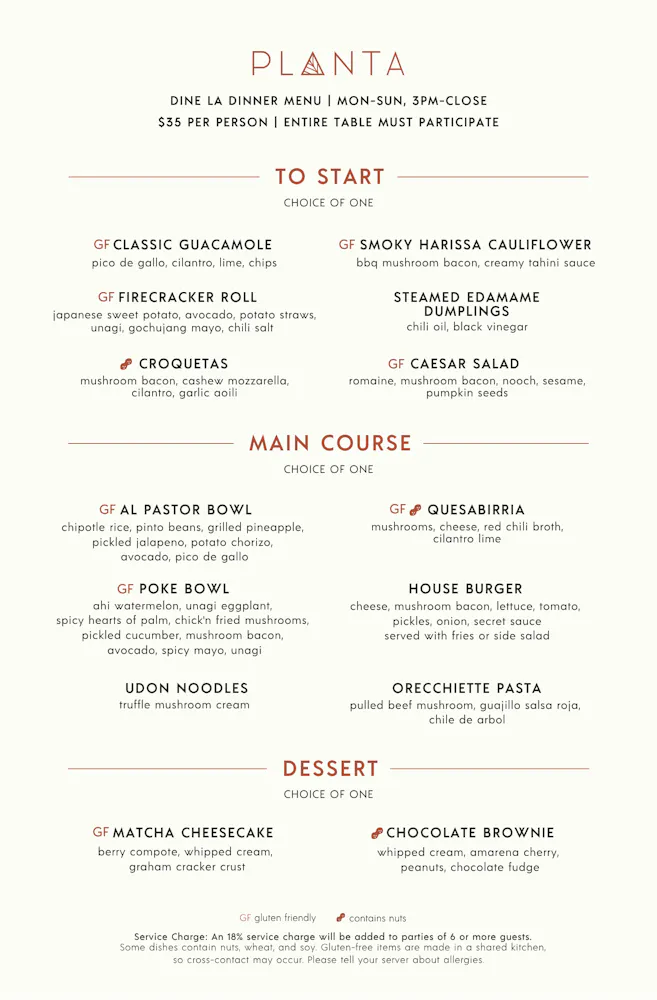
Ahi watermelon sits on crispy rice with avocado. Steamed edamame dumplings come with chili oil and black vinegar. Japanese sweet potato gets torched miso, kimchi, cilantro, and Thai basil. Udon arrives in truffle mushroom cream.
The menu keeps returning to texture. When you're reading an unfamiliar menu, texture descriptions may tell you more about what to order than the dietary label.
Crisp against soft. Char against creaminess. Pickle against richness. Heat against sweetness. You remember the bite before you remember the category.
Hungry already? See what is on the NoMad menu.
New York Has Been Training for This
New York understands a menu with more than one passport stamp.
A week can move from a bodega breakfast to hand-pulled noodles in Flushing, a slice on the sidewalk, and martinis somewhere that makes you set a Resy alert.
That makes the NoMad menu easy to read.
Maki sits beside wok dishes, dumplings, bao, and noodles. A few routes in:
There is enough recognition to order quickly, then enough invention to look twice. Plant-based sushi stops feeling niche when the menu lands in front of someone who already loves maki.
Build Your First Order in Four Moves
Shared plates are a New York dining shortcut. They turn indecision into permission to order more.
They also make mixed-diet dinners less awkward. Nobody gets handed a lonely “special option.” One menu, plenty to pass around, everyone choosing freely, and nobody stuck with the afterthought.
For a first visit, order in four moves:
The sequence builds a dinner with range. No persuasion required.
It also works for vegetarian-friendly groups, curious omnivores, committed plant-based diners, and the friend who only looked up from the menu when someone said “truffle.”
If that sounds like your table, book in NoMad and order for the middle.
Match Your Order to the Occasion
A restaurant can win on food and still lose the second reservation.
New York adds its own tests. The location has to survive everyone’s commute. The room needs enough life for a Friday night and enough ease for a Tuesday. Drinks should feel like part of dinner. Service has to keep the whole thing moving.
NoMad helps. West 27th Street sits near Madison Square Park and the Flatiron area, catching lunch meetings, after-work plans, dates, and friends coming from different directions.
The current schedule covers weekday lunch, happy hour, late-night offers, and weekend brunch. A plant-based restaurant becomes easier to choose when it fits the same occasions as anywhere else on your saved list.
No ceremony required. Just somewhere worth going hungry.
Read the Menu Like a New Yorker
Forget the dietary label for a minute and scan for the signals you already use when deciding where to eat.
That is the better test when you're learning to read a plant-based menu. Ask the same question you would ask anywhere else: what do I want to steal off somebody else’s plate?
If several answers appear quickly, the menu is doing its job.
FAQs
Will non-vegans enjoy a fully plant-based restaurant?
They can. Familiar formats, assertive seasoning, satisfying texture, and plenty of choice give people room to enjoy dinner without sharing the same diet outside it.
What should a non-vegan order first?
Order by craving. Crispy rice, edamame dumplings, maki, chick’n fried mushrooms, and udon are easy starting points at NoMad because the formats are recognizable and the flavors do the convincing.
Is plant-based sushi just vegetables in a roll?
The current menu goes further. It uses ahi watermelon, carrot salmon, unagi eggplant, tempura broccoli, and heart of palm crab across nigiri and maki.
Where is the NYC restaurant?
The NoMad location is at 15 W 27th Street, near Madison Square Park and the Flatiron area. Check the NYC location page for current hours and reservations.
Is it good for mixed dietary groups?
A fully plant-based menu gives everyone the same starting point. Shareable dishes let the table try several things without sorting dinner into dietary camps.
What should I look for on a plant-based menu?
Craveable food should lead. Familiar formats, confident seasoning, varied textures, and a room that suits the occasion will usually tell you more than the word “vegan” on the door.
The Label Can Stay Small
New Yorkers are difficult to impress for a useful reason. There is always another restaurant, another neighborhood, another pop-up, and another thing somebody insists is worth taking two trains for.
Plant-based food belongs under that same pressure.
Choose the place that makes you curious. Order what sounds good. Pass it around. Let the ingredients surprise you somewhere between the first crispy bite and the argument over who gets the last dumpling.
That is a better future for plant-based dining than being treated as its own little category.
Make the NoMad reservation when dinner calls.